One Aussie online store might pay $600 a month for SEO while another pays $15,000, and both agencies swear their price is the going rate. That gap is exactly why so many e-commerce founders feel lost when quotes start rolling in. This post breaks down what SEO fees actually look like across Australia right now, so you know what deliverables should come with the price tag before you sign anything.
Table of Contents
- SEO Pricing Snapshot Across Australia
- The Main SEO Fee Models You’ll Come Across
- What You Should Actually Get for Your Fee
- Red Flags That Mean You’re Overpaying or Underdelivering
- How to Judge if an SEO Fee Is Worth It
- Wrap-up Getting Real Value From Your SEO Spend
- Common Questions About SEO Fees in Australia
SEO Pricing Snapshot Across Australia
A small online shop selling candles from Bendigo pays nowhere near what a big retail chain pays for SEO, and that gap can be five or six times bigger than most people expect. SEO fees in Australia bounce around a lot depending on who you are and what you need done. Some agencies charge by the hour, some charge flat monthly rates, and some bundle everything into one big package. Before you sign anything or start comparing quotes from places like StudioHawk, Prosperity Media, or Bonfire, it helps to know what’s normal and what’s not. This section breaks down rough pricing so you have a starting point, not a final answer.
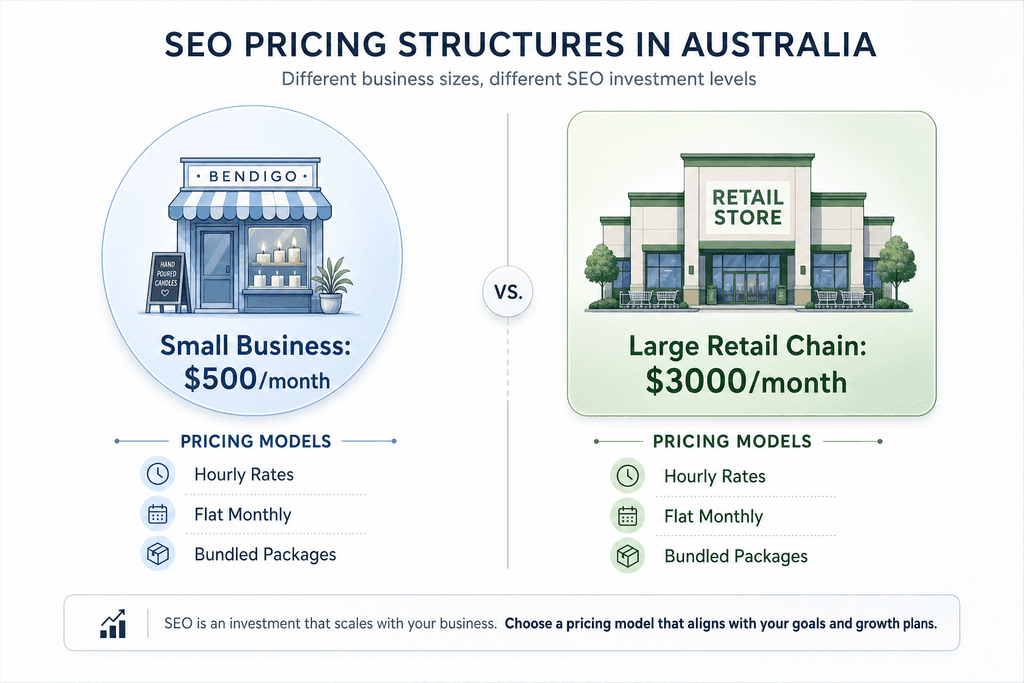
Business size matters a lot here. A tiny store with under 50 products doesn’t need the same level of work as a national retailer with thousands of SKUs and multiple locations. That’s why fee ranges spread out so much once you start comparing quotes.
| Business Size | SEO Audit | Ongoing SEO | Content Strategy | AI SEO |
|---|---|---|---|---|
| Small (under 50 products) | $800 to $2,000 | $1,000 to $2,500/mo | $500 to $1,500/mo | $500 to $1,200/mo |
| Mid-size (50 to 500 products) | $2,000 to $4,500 | $2,500 to $6,000/mo | $1,500 to $3,500/mo | $1,200 to $3,000/mo |
| Enterprise (500+ products) | $4,500 to $10,000+ | $6,000 to $15,000+/mo | $3,500 to $8,000/mo | $3,000 to $7,000+/mo |
Why does Australian pricing look different from what you’d see in the US or UK? A few reasons come down to market size and cost of living.
- Smaller domestic market means less competition driving prices sky high
- Higher average wages in Australia push agency overheads up compared to some US markets
- Fewer large SEO agencies means less price standardisation across the industry
- Currency differences make direct comparisons tricky without converting properly
These numbers are just a benchmark, not gospel. Your actual seo fees will depend on your industry, how competitive your keywords are, and how much cleanup work your site needs before growth even starts.
The Main SEO Fee Models You’ll Come Across
Aussie SEO agencies charge in a few different ways, and it can get confusing fast when you’re comparing quotes. One agency might quote $2,000 a month, another might quote $15,000 for a one-off project, and you’re left wondering if you’re comparing the same thing at all. Before you sign anything, it helps to know what each pricing model actually means and what you’re meant to get out of it. According to Backlinko’s SEO pricing research, most businesses pay somewhere between $500 and $5,000 a month for ongoing SEO work, though this varies a lot by industry and competition.
Here’s a quick rundown of what’s out there:
- Monthly retainer – You pay a set fee each month for ongoing work like content, technical fixes, and link building. This is the most common model for e-commerce because SEO isn’t a set-and-forget thing.
- Project-based pricing – You pay once for a specific deliverable, like a full technical SEO audit or a site migration review. Good if you just need a diagnosis, not ongoing management.
- Hourly consulting – Smaller businesses sometimes hire an SEO consultant by the hour for advice or troubleshooting. This works if you’ve got someone in-house who can action the recommendations.
- Performance-based pricing – You pay based on rankings or traffic hitting certain targets. This one sounds great on paper but it’s rare, and honestly, a bit risky because it can push agencies toward short-term tricks instead of sustainable growth.
| Model | Typical Cost | Best For |
|---|---|---|
| Monthly Retainer | $500-$5,000/mo | Ongoing e-commerce growth |
| Project-Based | $1,500-$10,000 | Audits, one-off fixes |
| Hourly Consulting | $100-$300/hr | Small teams, guidance only |
| Performance-Based | Varies widely | Rarely recommended |
Most reputable agencies lean towards retainers because SEO takes consistent effort. A one-off audit is useful, but it won’t keep your rankings moving month after month.
What You Should Actually Get for Your Fee
Paying for SEO is easy. Knowing whether you’re actually getting your money’s worth is the hard part. A lot of e-commerce owners get a monthly invoice and a vague report full of green arrows, but no real sense of whether it’s helping sales. If you’re paying for SEO, you should walk away each month with things you can point to and say “this moved the needle.” That’s the whole point of a technical SEO audit that comes with prioritised action items, not just a 40-page PDF nobody reads.
Here’s what a legit agency should be delivering each month:
- A technical audit with a clear list of what to fix first, not just a diagnosis
- A content strategy built around keywords that actually drive sales, not just traffic numbers
- Genuine digital PR and link building that builds real authority, not spammy links from link farms
- Reporting that ties back to revenue and rankings, not just impressions or clicks
This is where a lot of agencies fall short. They’ll show you traffic charts trending up, but never connect that to actual orders or leads. At ScaleCurrent, this is a big part of why we built our local SEO plans and Search Audit around commercial outcomes rather than vanity metrics. If your reports don’t mention sales, conversions, or product page rankings, you’re probably not getting what you’re paying for.
The Digital Elevator’s SEO pricing guide makes a similar point, noting that businesses often overpay for reporting that looks good but doesn’t tell them anything useful about growth.
Red Flags That Mean You’re Overpaying or Underdelivering
Some warning signs show up before you even sign the contract, and others creep in a few months into the relationship. Either way, it pays to know what bad SEO looks like so you’re not stuck paying for it. A common one is a report that only talks about rankings or traffic, with zero mention of how that connects to sales. If your agency can’t explain why a keyword matters to your bottom line, that’s worth questioning.
Watch out for these too:
- Long lock-in contracts with no exit clause or performance check-in points
- Suspiciously cheap fees that rely on spammy backlinks or AI-generated content dumped onto your blog
- No diagnosis phase before they hand you a quote, meaning they didn’t even look at your site properly
- Generic reporting templates that look the same for every client, regardless of industry
Cheap providers can be tempting, especially for startups watching every dollar. But the Astriden SEO pricing guide points out that low-cost SEO often means outsourced, templated work that can actually hurt your site’s reputation with Google over time.
On the flip side, a structured agency that starts with a proper diagnosis, sets clear milestones, and reviews performance regularly tends to cost more upfront but avoids the cleanup costs later. This is why we always start with a Search Audit before quoting anything, so you know exactly what you’re paying to fix and what “done” actually looks like.
How to Judge if an SEO Fee Is Worth It
Most business owners judge an SEO fee by one thing: did rankings go up. That’s the wrong question. A number one ranking on a keyword nobody searches doesn’t pay your rent, and it definitely doesn’t cover what you’re paying your SEO agency each month. The real question is whether that fee turned into more sales, more leads, or more revenue in your pocket. If an agency can’t tie their work back to those numbers, you’re paying for a report, not a result.
Here’s a stat worth sitting on: most legit SEO work takes 4 to 6 months to show measurable movement in traffic or conversions. Anyone promising faster than that is either doing something risky or just telling you what you want to hear.
- Watch conversion rate changes on organic traffic, not just visitor count
- Track revenue per organic session month over month
- Compare cost of the retainer against actual sales it helped generate
- Ask how they define a “win” before you sign anything
This is where a diagnosis-first approach earns its keep. Instead of throwing a generic package at every client, a proper audit finds out what’s actually broken first, whether that’s site structure, content gaps, or a backlink profile that’s thin or spammy. That upfront work means the fee you pay afterwards is targeted at real problems, not guesswork. It’s the difference between paying for a shotgun approach and paying for a fix that’s actually aimed at something.
Agencies run by people who’ve actually operated e-commerce stores tend to set fees and timelines that make sense. They know a $15,000 a month retainer for a business doing $50,000 in monthly revenue doesn’t add up. They’ve felt the pressure of margins and cash flow themselves, which usually means more grounded pricing and realistic expectations from day one.
| Question to Ask | Why It Matters |
|---|---|
| What’s included in the fee | Avoids scope confusion later |
| How is success measured | Keeps focus on revenue, not vanity metrics |
| Is there an audit first | Confirms diagnosis-first approach |
Before committing to a big monthly retainer, it’s worth asking for a free or low-cost SEO audit. It shows you what’s actually wrong, gives you a sense of the agency’s thinking, and helps you avoid paying seo fees for work that was never going to move the needle in the first place.
Wrap-up Getting Real Value From Your SEO Spend
So where does this leave you. SEO fees in Australia usually land somewhere between a few hundred bucks a month for basic stuff, up to $5,000 or more monthly for full-scale campaigns with content, links, and technical work all rolled together. Hourly rates and one-off audits sit in their own bracket too, depending on what you actually need done. None of these numbers mean much on their own though.
What actually matters is what you get for that fee. A cheap package with no reporting and vague promises is worse value than a pricier one that comes with clear deliverables. Look for things like:
- Regular reports that show real numbers, not just rankings
- A clear list of what work gets done each month
- Someone who can explain why they’re doing something, not just that they are
This is basically the whole point of an audit-first approach. Before you commit to a fee structure, you should know exactly what’s wrong and what fixing it might cost. ScaleCurrent starts every client relationship with a Search Audit, so you’re not paying for guesswork or generic packages that ignore your actual site issues. It’s a straightforward way to make sure the fee matches the work, and the work matches your business.
Still got questions about how this all works in practice. That’s fair enough, there’s a fair bit to unpack when it comes to seo fees and what they should include. The next section covers the common questions we get asked.
Common Questions About SEO Fees in Australia
Most business owners have the same handful of questions when they start looking at seo fees, so we figured we’d answer them straight up. No fluff, no jargon, just the stuff you actually want to know before you sign anything.
How much should a small e-commerce store budget for SEO monthly
Most small Aussie stores sit somewhere between $1,500 and $4,000 a month once you factor in audits, content, and ongoing optimisation. It really depends on how competitive your category is and how much ground you need to make up.
Is a cheap SEO agency ever worth it
Sometimes, but it’s rare. A lot of cheap packages skip the diagnostic work entirely and jump straight to generic tactics that don’t fit your business.
- Cheap can work for very simple, low competition niches
- It usually falls short for e-commerce brands competing on Google Shopping and organic search at the same time
How long before SEO fees show a return
Give it three to six months before expecting real movement, and closer to nine months for the bigger wins. Anyone promising overnight results is either exaggerating or doing something that won’t last.
Should you pay for an SEO audit separately from ongoing SEO
Yes, and honestly, it’s one of the smartest ways to spend your first bit of budget. An audit tells you exactly what’s broken before you pay someone to fix it, which stops you wasting money on guesswork.
What makes AI SEO pricing different from traditional SEO
AI SEO usually costs a bit more upfront because it involves extra tools and technical setup for things like structured data and AI search visibility. But it can save money longer term by cutting down on manual content work. ScaleCurrent builds this into our local SEO plans so you’re not paying for two separate services that don’t talk to each other.
At the end of the day, seo fees should map to a clear plan, not just a monthly invoice. If your agency can’t explain what you’re paying for in plain English, that’s usually a sign to ask more questions.
Want more customers from Google and AI search? Tell us about your business.