Some AI answer engines only cite a handful of sources before giving a shopper the final answer, which means your product pages either make that shortlist or they don’t exist to that customer at all. AI search optimisation is the work of setting up your site so tools like Google AI Overviews, ChatGPT and Perplexity can actually read your pages, make sense of them, and quote them back to buyers. Aussie retailers are already watching a slice of their traffic move away from the usual blue links toward these AI summaries, and getting a handle on this now, something we help clients with through a free AI check at ScaleCurrent, puts you ahead of shops still waiting for the next Google update to fix things.
Table of Contents
Fix the Technical Basics AI Crawlers Rely On
Half the ecommerce sites we check block AI crawlers without even knowing it. One line in a robots.txt file is all it takes to shut the door on GPTBot, Google-Extended, and every other bot deciding whether your products show up in AI answers.
Before doing anything fancy, check the basics are actually switched on. A lot of Shopify and WooCommerce sites have default settings that quietly block these crawlers.
- Robots.txt check: make sure GPTBot, Google-Extended and Bingbot are allowed, not disallowed
- Schema markup: add Product, FAQ and Organization schema so AI tools can pull price, stock, and business details correctly
- Site speed: pages loaded with heavy JavaScript often get skipped or mis-read, plain HTML gets parsed cleanly
Mobile-friendly, fast-loading pages with clean code get picked up more reliably than bloated ones stuffed with tracking scripts and pop-ups. This is the exact stuff we look at during a free AI check, since most founders don’t have time to dig through source code themselves.
Write Content That Directly Answers Buyer Questions
AI tools like clear, direct answers they can lift and quote. If your product page rambles for three paragraphs before saying what the thing actually does, it gets skipped over for a competitor’s page that answers straight away.
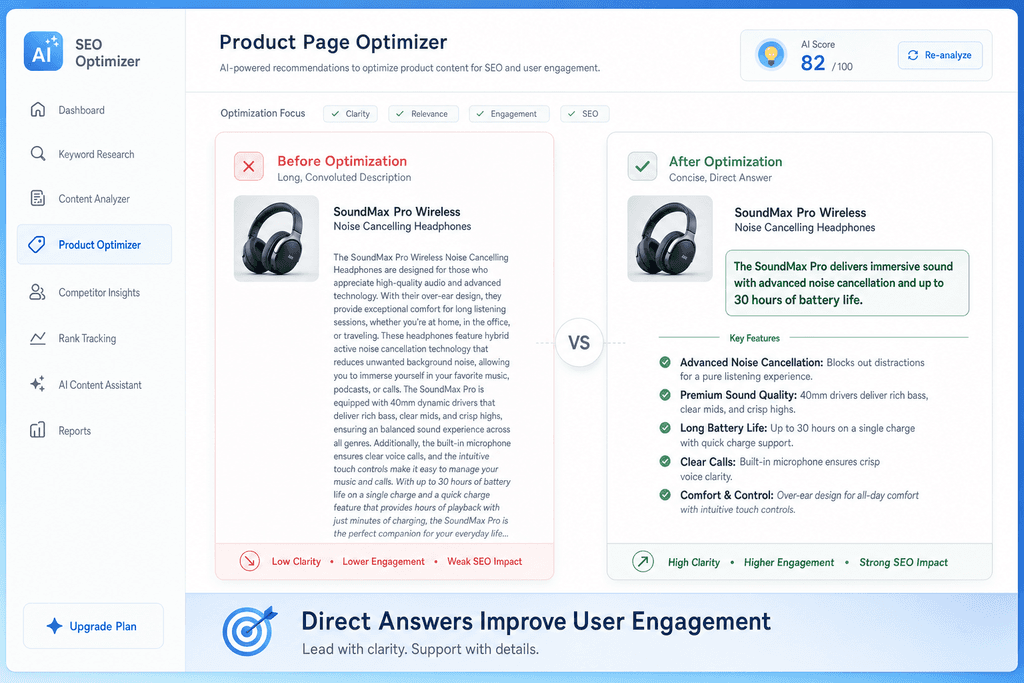
Answer the question in the first sentence, then explain. For example, if someone asks “what size hot water system do I need,” the first line should give a straight answer, then the supporting detail follows underneath.
- Match your headings to how customers actually type questions, not how marketing teams phrase things
- Use real numbers, materials and sizes in product descriptions instead of words like “premium” or “high-quality”
- Break long product pages into short sections with one clear point each
This piece on optimising content strategy for AI search covers similar ground if you want more detail on structuring answer-first content.
Keep Product Data Consistent Across Every Platform
Here’s something founders don’t think about, if your business name, pricing or stock status doesn’t match across your website, marketplaces and directories, AI models get confused about which source to trust.
Consistency is a trust signal. When an AI tool sees the same product specs and pricing in three different places, it’s more likely to cite your business as the answer.
| Signal | Consistent Data | Inconsistent Data |
|---|---|---|
| Business name | High trust | Confused sourcing |
| Pricing | Cited confidently | Often skipped |
| Stock status | Included in answers | Left out entirely |
Regularly checking this across every listing is tedious, which is exactly why a Search Audit exists, it flags mismatched details before they cost you a sale. If you’re weighing up options, this AI search optimisation guide breaks down more best practices worth knowing.
Get in touch through our contact page if you want a second set of eyes on where your data might be slipping through the cracks.
Wrap-up
So that’s the three pillars really. Technical access so bots can actually crawl your site, answer-first content so they know what to grab, and consistent data so they trust what they find. None of this is flashy work, but it’s the stuff that adds up over time.
AI tools don’t reward the cleverest website, they reward the clearest one. If you’re an online retailer wondering where your store stands right now, a free AI check or a full AI SEO review is a quick way to find out. And if the basics of your local presence need sorting too, our local SEO services cover that ground. Either way, get in touch through our contact page and we’ll tell you straight where the gaps are.
How is AI search different from normal SEO
Traditional SEO chases rankings on a results page. AI search optimisation is about getting your business mentioned or recommended when someone asks an AI tool a question directly. It relies more on clear facts, structured info, and trust signals than backlinks and keyword density alone.
How long until I see results
Most Australian businesses start noticing changes within six to ten weeks, though it depends on how messy your current site structure is. A free AI check usually shows us quick wins in the first session, with steadier gains building over a few months.
Can a small online store really compete
Yes. AI tools care more about clear, accurate, well-organised information than site size or ad budget. A small store with tidy product data and honest reviews can outrank a bigger competitor that hasn’t cleaned up their content, which is why our Search Audit focuses on fixing those basics first.
Want more customers from Google and AI search? Tell us about your business.