Fewer than a dozen online marketing gurus have a track record you can actually check against real revenue, not just a highlight reel of screenshots. Most people selling advice online are selling a course, a coaching call, or a membership, not a result you can measure in your own store. For an Australian e-commerce founder watching ad costs climb, that difference matters more than follower counts. A short list of people who have built or sold real businesses, and can show the numbers, is worth more than another hour of scrolling through hot takes.
The people worth following usually have one thing in common. They built something, ran paid traffic or organic search against it, and can point to a public outcome, not just a promise. That is a small group once you filter out the noise, but it is enough to shape how you think about growth without wasting a weekend on guru worship.
Table of Contents
Why Following the Right Experts Actually Matters
Bad advice from an unverified guru costs you twice. You burn ad spend testing a tactic that never worked outside a highlight reel, then you spend more fixing the mess it left in your account structure or your site’s search performance.
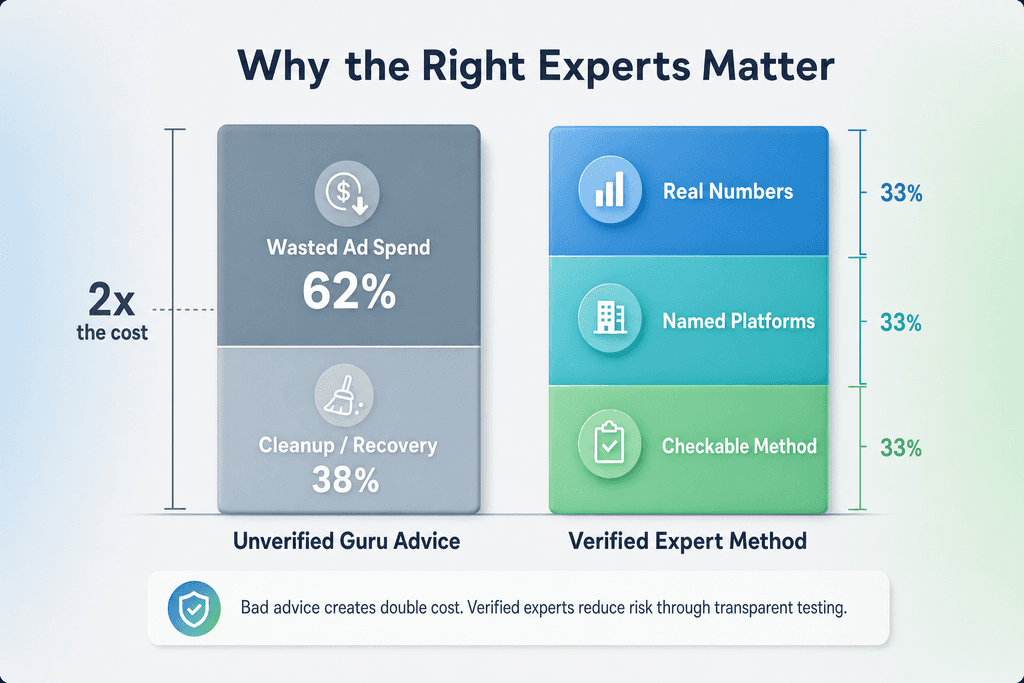
Trustworthy experts show their working. They publish real numbers, name the platforms they tested on, and let you check the method yourself instead of asking you to trust a screenshot, as shown in this case study round-up.
| Red flag | Green flag |
|---|---|
| Vague claims, no source data | Named campaigns with public results |
| Sells courses, not services | Runs a real business or agency |
| Screenshots with numbers blurred out | Full dashboards or audits shared |
| Advice never dated or updated | Content revised as platforms change |
Use that table before you follow anyone new. If you want a second opinion on whether a tactic fits your store, a free check against your own site through AI SEO tells you more than another thread of guru opinions.
SEO Experts Worth Following
Three names come up again and again when Australian founders ask who to trust on search. Rand Fishkin, founder of SparkToro, is known for data-backed audience research rather than guesswork about who your customers actually listen to. Marie Haynes has built her reputation on close reading of Google’s algorithm updates and E-E-A-T guidance, which matters if your product pages keep sliding after a core update.
Aleyda Solis works as an international SEO consultant and publishes technical SEO frameworks that scale from a single Shopify store to a multi-market catalogue. What separates these three from the noise is method, not personality. They test changes on real sites, track rankings over weeks rather than days, and refuse to react to every algorithm rumour that floats through marketing forums.
- Check if they publish dated case studies, not just quote cards
- Look for a named site or client they tested the tactic on
- See if they update advice after major algorithm changes
- Confirm they explain why a tactic worked, not just that it did
The one rule worth keeping is to test a change on a small set of pages before rolling it across your whole catalogue. A store with thousands of SKUs cannot afford to guess at scale.
Paid Advertising Experts to Learn From
Ben Heath built his name on Facebook and Meta ads by publishing transparent case studies, including the budgets and results, not just the wins. Frederick Vallaeys, who worked on Google Ads in its early years, now writes about PPC automation with a level of detail that helps founders separate genuine efficiency gains from a tool vendor’s pitch. Savannah Sanchez breaks down real ad accounts, spend and all, instead of talking in theory about “what works” in social advertising.
The habit that ties these three together is discipline around numbers. They test with small budgets first, they track cost per acquisition rather than reach or impressions, and they treat vanity metrics as a distraction from margin.
- Set a test budget you can afford to lose before scaling any campaign
- Track cost per acquisition weekly, not just at month end
- Ignore reach and impressions unless they move actual sales
- Compare Meta and Google results side by side before shifting spend
The habit worth copying is testing on a slice of budget first, then scaling only what holds up against your own cost per acquisition, not someone else’s screenshot.
Email and Retention Marketing Voices
Chase Dimond is known across e-commerce for breaking down real email flows, including the exact sequence and send timing behind a launch or a win-back campaign. Val Geisler is trusted for subject line and flow advice that she has tested on live lists rather than theorised about. Andrew Chen writes on growth and retention more broadly, with a focus on churn and lifecycle patterns that apply directly to repeat purchase behaviour in online retail.
The shared lesson from all three is that retention deserves the same rigour as acquisition. A flow that recovers a cart or wins back a lapsed customer often costs less to run than a fresh ad campaign and can lift revenue without extra ad spend.
- Segment your list by purchase recency, not just signup date
- Build a win-back flow for customers inactive past 90 days
- Test subject lines on a small segment before a full send
- Track flow revenue separately from campaign revenue each month
The point to hold onto is that a working win-back flow, once built, keeps earning without a fresh brief every month.
Applying Guru Advice to Your Own Business
Turning any of this advice into results starts with testing one tactic at a time, not adopting a guru’s whole playbook in one go. A tactic built for a US direct-to-consumer brand with a million-dollar ad budget will not behave the same way on a smaller Australian store, so match the advice to your business type before you commit spend to it.
Track results against your own baseline, from your last quarter or your last campaign, rather than against someone else’s public screenshot. A free Search Audit or an AI check against your own site does the same job for search decisions that a small test budget does for ads: it tells you what is actually happening on your pages before you act on someone else’s numbers.
- Pick one tactic and one metric to test it against
- Run it on a small segment, page set, or ad set first
- Compare results to your own last quarter, not a guru’s case study
- Scale only the parts that beat your baseline
If you want that baseline checked before you act, a local SEO audit or a conversation through the contact page is a faster way to find out than testing blind. The rule that matters most is that a tactic only earns a place in your store once it beats your own numbers, not before.
Deciding How Many Voices to Follow
Following fifty accounts for scraps of advice costs you time you could spend testing on your own store. Following two or three trusted voices per channel, one for search, one for paid, one for retention, costs less time and gives you a consistent method to check new claims against. Pick the smaller list if you run a lean team and need decisions this week, not a feed to scroll.
Anyone promising a secret formula or a guaranteed ranking is selling a shortcut that does not exist, and that costs you money the moment you act on it. An expert who shows their own dashboard, names the store or account they tested on, and dates their advice is worth the follow, even if their content comes out less often.
Advice built for a US or UK audience often assumes search habits and units that do not match Australian shoppers, so adapting it costs an extra step most founders skip. A tactic tuned for imperial measurements or a different search engine mix needs adjusting for local search behaviour before it earns a place in your store.
| Approach | Time cost | Best fit |
|---|---|---|
| Follow 2-3 experts per channel | Low, a few hours monthly | Lean teams needing fast decisions |
| Follow a wide feed of accounts | High, daily scrolling | Teams building broad market awareness |
| Test every claim on your own site first | Moderate, per test | Founders who want proof over opinion |
None of these choices replace checking a claim against your own numbers. A quick way to do that for search decisions is a free AI check through AI SEO, which tells you what your own pages are doing before you copy someone else’s playbook.
Which Tactic Gets Tested This Month
Pick one name from the list above and one tactic they teach, not their whole approach. Maybe it’s a win-back flow from Chase Dimond, or a small-budget Meta test from Ben Heath. Run it against your last quarter’s numbers, not against their case study. If you’re not sure where your store stands before you start, ScaleCurrent’s free AI check gives you that starting point on your own pages, so the test measures something real. Set a date to review results against your baseline, then decide if it earns a permanent spot in your store.
Want more customers from Google and AI search? Tell us about your business.
Common Questions About Marketing Gurus
How do I know if a marketing guru’s advice still applies today?
Check the date on the content and whether the platform they tested on has changed since. Ad platforms and search algorithms shift often enough that a tactic from two years ago can already be dead. If the creator hasn’t posted an update after a major Google or Meta change, treat their older advice as a starting point to test, not a rule to follow blind.
Should I pay for a guru’s course or just follow their free content?
Start with the free content and see if it holds up against your own numbers before you pay for anything. A course only earns its price once a free tactic from the same person has already worked on your store. Paying upfront for access to more detail is a bet on someone you haven’t tested yet.
What if two experts I trust give conflicting advice?
Run both on a small slice of your traffic or budget and let your own numbers settle the argument. Two credible people can disagree because they built their methods on different store sizes, product types or ad accounts, so neither one is automatically wrong for your business. A short test against your own baseline tells you more than picking a side based on who has the bigger following.
Can advice from a big international guru actually work for a small Australian business?
Sometimes, but the tactic usually needs adjusting for local search terms, GST-inclusive pricing and Australian shopping habits before it works the same way it did in a US case study. A tactic built for a huge ad budget or a different market often needs scaling down and re-testing, not copying line for line. If you want to check how a search-based tactic performs on your own pages before you commit, a Search Audit through ScaleCurrent gives you that local read.